
Sources: On Law
Not by reason of Authority, but by the authority of Reason.

This is an entry in the Resources series.
Entries in this series will be more dry and technical, not building toward any particular conclusion – but they will also be very useful, laying down and unpacking foundations that will have a wide range of applicability to many arguments in the future.

The Core Thread
In his treatise on the essence of law, Saint Thomas Aquinas proposes that “law is a rule and measure of acts, whereby man is induced to act or is restrained from acting”.1 He then proceeds to argue that law – when properly understood – must be defined as “an ordinance of reason for the common good, made by [one] who has care of the community, and promulgated.”2 Operating from this definition, Aquinas holds that the command of any ruler must be in accord with reason if it is to truly obtain the nature of law, along with any corresponding moral force that could oblige obedience:
But in order that the volition of what is commanded may have the nature of law, it needs to be in accord with some rule of reason. And in this sense is to be understood the saying that the will of the sovereign has the force of law; otherwise the sovereign’s will would savor of lawlessness rather than of law.3
Indeed, if our rulers are not restrained by any rule of reason – if we seriously take “whatsoever pleases the sovereign has force of law” as a core principle, full stop – then our vision of law will rapidly and inevitably devolve into a defense of even authoritarian dictators who can proclaim “I have the power, so I will proceed, because I can. That’s the rule: power.”4 And indeed, if law is ultimately nothing more than power – if those who insist that authentic law is inseparable from reason are fundamentally misguided – then law does become something fundamentally oppressive, and even deeply irrational: arising arbitrarily (and claiming to bind other persons to obedience!) based on nothing other than the power-holder claiming “this is what I desire, what pleases me, what I think is best here and now”, with ordinances that are radically unstable (capable of changing just as quickly as the whims, pleasure or desire of the ruler changes), and never truly requiring any rigorous defense, explanation, or further justification.

As we begin to articulate any philosophy of law, this is the immediate fork in the road that determines everything else: either law is at root simply an ordinance of power (ultimately enforced by violence, or threats of violence, from those who happen to currently hold that power)… or else law is something inherently limited as an ordinance of reason (which can in principle be understood and agreed to by all, promulgated with stability, and enforced as something binding equally upon all).5
In the same way, Aquinas argues that law must always be an ordinance of reason fundamentally directed to the common good of the community (which, in the case of a city or state, is the natural earthly happiness of its citizens). And broadly speaking, there are two complementary ways that man-made law can fulfill this function: either positively, by commanding that certain things should be done (because they are conducive to the common good); or negatively, by commanding that certain things should not be done (because they are harmful to the community). In all cases – whether the aim of the law is to strengthen the community, or to prevent harm from being done to the community, or to help heal the community after harm has been done – authentic laws must be somehow reasonably directed to the support of the community. And this condition is so necessary that, whenever an ordinance is not reasonably directed to supporting the common good, by that very fact it ceases to be true law.6
And ideally, in the grand scheme – if the law is truly reasonable, and thus able to be seen and appreciated by the community as something good – it will happen that the external form of the law naturally takes root internally. That is to say: through our deliberate and repeated consent to obey reasonable authority, we can hope to gradually develop habits (indeed: virtues) that will become an internal fount of that reasonable authority. To the degree this can be accomplished, we will then be “induced to act or restrained from acting” not by any external force, but simply by our own internal conscience, by our own authentic desire to uphold that which we apprehend as truly good and reasonable – thereby rendering the enforcement of right reason (via any form of coercion or violence) radically unnecessary, as it ideally ought to be.7
Layers of Law
There are four basic categories of law that Aquinas proposes, and – without getting too deep into details – it will be very useful to sketch out these categories, to better understand how they are connected and interrelated with one another.
I. Eternal Law
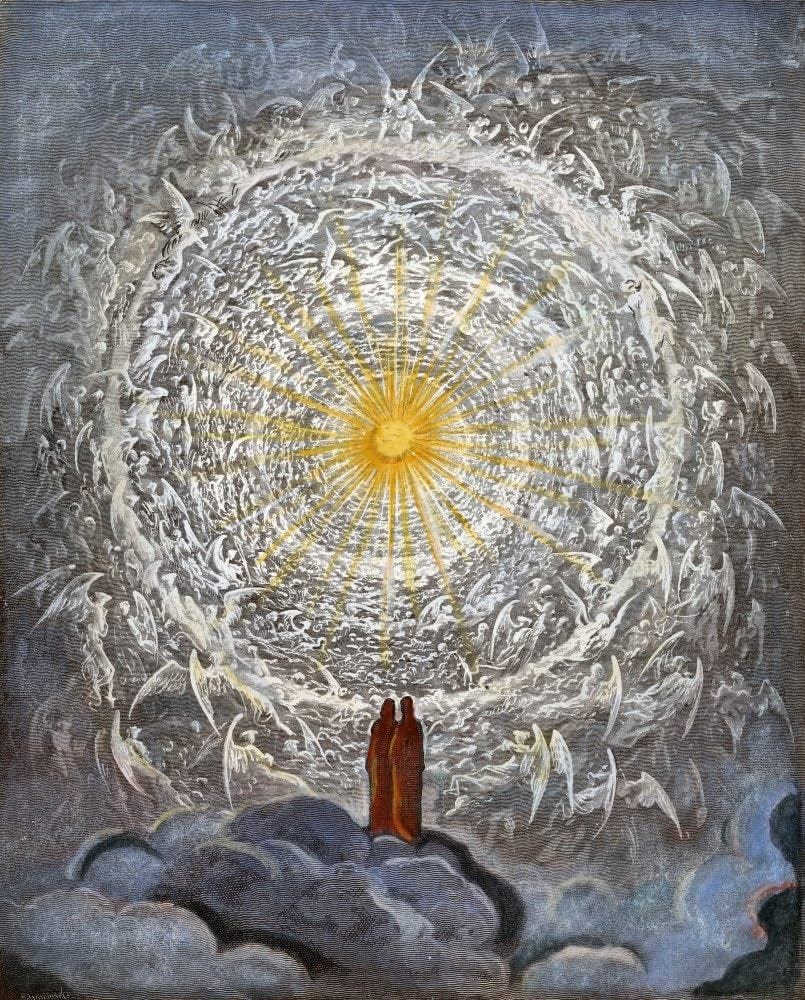
First and foremost is the eternal law, which is given by Divine Providence: the Supreme Reason by which the whole community of the entire universe is infallibly governed. This is a Thomistic category of law very unlike what we usually imagine law to be: unchangeable, eternal, and indeed rather more like what we might imagine as destiny or even fate – that source by which the governance of the universe (especially its creation, Redemption, and final end) are in some deep sense infallibly preordained to take place as the Creator and Author of the universe has decreed.8
But while this category of law is not particularly useful to dwell upon, it remains helpful to see why Aquinas considers it first: because every authentic law in every other category of law below this must be an ordinance of right reason, which can in principle trace its roots back to the eternal law, which is an ordinance of the Divine Reason.9 And while on a practical level this concept may not be useful to our daily lives, on a theoretical level the value is immense: for it centers reason as the core thread infallibly woven into all forms of legitimate authority. Thus, as our rulers and our laws change according to time and circumstances – as reason requires! – we can see how the deep principle spoken in John 19:11 will be applicable to every non-divine authority: “You would have no power over me unless it had been given you from above.”

II. Natural Law
The second category is the natural law, which is something imprinted on or woven into the very nature of creation, and thus capable of being known (at least to a very significant degree, although sometimes only with great difficulty) via the natural light of human reason.10 As a starting point, this may be understood as loosely similar to how we speak about the “laws” of physics (which are also something profoundly woven into the very nature of things)… but that analogy breaks down: because this is not a rule of physics, but a rule of reason that we can discern (about what is helpful or harmful to the flourishing of creatures) operating much more on a moral level. As an example, we can point to our natural sense of justice: that deeper standard of reason by which we can intuitively recognize (at least in a basic way) when innocents are being unjustly harmed, and which we can call others to correctly recognize.
And here Aquinas identifies the core thread connecting back to the eternal law: for he observes that the natural law is not something radically distinct from the eternal law, but simply the participation of each creature in the eternal law (specifically via its created nature, which is constitutive of its very being, imprinted upon it or “promulgated” internally on a profound level). Moreover, precisely because it is a participation in the immutable eternal law, certain aspects of the natural law are similarly unchangeable; there is a core level (specifically named the first principles of the natural law) which can never contradict the eternal law from which creation itself is ultimately derived.11 It is through this internal fount (our created nature) that we have an innate inclination toward our proper acts and ends (those things which are good for us, which contribute to our flourishing); and indeed every creature has an innate inclination of this sort, whereby we can discern (admittedly perhaps only imperfectly, or with great difficulty) what that creature should do, or avoid doing, in order to flourish. Thus by carefully studying our nature, and the nature of the world around us – by observing what contributes to our flourishing, and applying reason to identify what should (or should not) be done, to help us flourish – we can begin to understand how the natural law “written” into the fabric of creation commands us (as rational creatures) to act.
Trying to say anything more than this would immediately drag us off into complex discussions that deserve their own reflection, but let it suffice for now to acknowledge that natural law claims are frequently abused by apologists oversimplifying or exaggerating the certitude of complex philosophical arguments. Sometimes, the conclusions drawn from a philosophical study of natural law are not abundantly or crystal clear; sometimes we should acknowledge that our reasonable arguments are only plausible or probable, and rigorous certitude is lacking (or else: is supplied by another source entirely, such as by religious doctrines distinct from the law of nature). We must embrace nuance and complexity by proceeding in much the same way that Aquinas does: by recognizing that nature provides only the most basic first principles (for instance: that one should not harm an innocent person), while leaving us some space to discern and debate the conclusions that reasonably follow from those principles. And yet: those first principles (beginning with our innate sense of what is right and just, our inclination to identify natural goods and evils that bring benefit or harm) are deeply imprinted upon the human heart: flowing from our nature as rational animals called to care for ourselves, and our communities, and the world around us.
III. Human Law
The third category is human law, which contains the laws devised by mankind for the common good of each individual human community. This is the category that we are most familiar with – but it is also the most messy, for we are forced to grapple with the blunt fact that unjust human law is often a practical reality in our world. Aquinas resolves that problem, however, by returning again to that core thread:
Human law has the nature of law insofar as it is according to right reason; and [in this respect] it is derived from the eternal law. But insofar as it deviates from reason, it is called an unjust law, and has the nature, not of law but of violence.12
As Augustine says… that which is not just seems to be no law at all: wherefore the force of a law depends on the extent of its justice. Now in human affairs a thing is said to be just, from being right, according to the rule of reason. But the first rule of reason is the law of nature… [thus] every human law has just so much of the nature of law, as it is derived from the law of nature. But if in any point it deflects from the law of nature, it is no longer a law but a perversion of law.13
This last observation is among the most critical to understand – and we will return to it again below – for this is precisely why power/violence is never a true source of law, in the sense that can morally require obedience. The mere will of the sovereign (indeed, the mere will of the people) carries no true moral authority unless it is grounded in right reason. If any ordinance of human origin is not in accord with right reason (e.g. if a superior orders the natural law rights of persons to be violated without due process), then such an authority is abusing their power when they attempt to impose or enforce such unreasonable commands. Even if an order retains the external appearance of law, it holds no legitimate moral authority, and is not morally owed any obedience.
This is the principle that justifies the military regularly reminding troops about their duty to disobey unlawful orders, which is itself implicitly built into the oath of obedience taken according to the Uniform Code of Military Justice. Obedience to authority is not a good unto itself unless it is fundamentally in accord with right reason (or at least reasonably presumed to be so). Manifestly unreasonable/unjust orders can never be legal in the Thomistic sense (as ordinances of reason); such orders are only willpower masquerading as law.14 The only possibility for nuance here will enter if we are facing a complex ordinance that contradicts the rule of reason in some points, but not in others: then, such a law retains moral force only “insofar as” it can be interpreted in accord with right reason, while it forfeits moral authority insofar as it “deflects from the law of nature” and thus “deviates from right reason” on those specific points; subtle determinations of this sort are properly assigned to judges, who must employ rules of reason to interpret the law, and to potentially identify where natural human rights are at play. In any case, the point remains that authentic human law must carry forward that core thread: grounding its ordinances upon some principle of reason/nature,15 and thus deriving its true moral authority from that deeper source that it recognizes and protects, but can never reasonably contradict.
Furthermore, because it is an ordinance of reason, human law cannot be properly understood in a purely mechanistic or excessively rigid manner. Rather, as Aquinas expounds, man-made law carries an inherent potential for reasonable exceptions:
…every law is directed to the common weal of men, and derives the force and nature of law accordingly. Hence the jurist says: By no reason of law, or favor of equity, is it allowable for us to interpret harshly, and render burdensome, those useful measures which have been enacted for the welfare of man. Now it happens often that the observance of some point of law conduces to the common weal in the majority of instances, and yet, in some cases, is very hurtful. Since then the lawgiver cannot have in view every single case, he shapes the law according to what happens most frequently, by directing his attention to the common good. Wherefore if a case arise wherein the observance of that law would be hurtful to the general welfare, it should not be observed. For instance, suppose that in a besieged city it be an established law that the gates of the city are to be kept closed, this is good for public welfare as a general rule: but, if it were to happen that the enemy are in pursuit of certain citizens, who are defenders of the city, it would be a great loss to the city, if the gates were not opened to them: and so in that case the gates ought to be opened, contrary to the letter of the law, in order to maintain the common weal, which the lawgiver had in view.16
It is difficult to understate just how critical this nuance is, given how it helps us avoid slipping into inhumanly cruel, legalistic approaches. At the end of the day, right reason is the supreme source of any authority: not merely the intention of the lawgiver (however that is supposed to be understood), nor the mere possession of power to coerce others through violence.17 Man-made laws cannot reasonably be uncompromisingly rigid: they can only be reasonable as a general rule… which may or may not remain reasonable under extraordinary circumstances.
More philosophically, this deep capacity for nuance arises from the fact that man-made laws are not simply a participation in the natural law, in the sense that the natural law is a participation in the eternal law. Indeed, if that were the case, then human law would be something much more immutable and identical for all communities, just as the first principles of the natural law are immutable and identical for all. Rather, we speak of human law being derived from or rooted in the natural law. This means that, while the natural law provides certain general principles – precious essentials that are immutable and the same for all communities (e.g. the wickedness of murder, or the necessity of due process before punishment) – practical human reason is left to determine more precisely how those broad principles are to be prudently implemented and applied within each individual human community.18 Thus a unique feature of human law is the legitimate diversity that can arise among the laws of different human societies: with man-made ordinances reasonably differing or changing according to circumstances of time and place, despite the fact that all such laws must ultimately be grounded upon the same first principles of the natural law.19

IV. Divine Law
Fourth and finally for Aquinas, there is divine law – those ordinances (generally regarding rituals of divine worship) that have been given by God Himself directly to His people, received and retained in Scripture and Tradition. And because this is a category of law not naturally knowable by the light of reason alone – instead, it is knowable only via special divine revelation – this is (naturally) the most controversial category, for any sense of obedience owed pre-supposes some confidence in the authenticity of the allegedly divinely-revealed law, which could easily be disputed. But on the assumption that such a thing exists, this category of law must be considered separately, for it differs from each of the former categories in a unique way:
Divine law differs from human law: for it holds a much broader competence that human law can never claim, namely, the authority to forbid and punish all sins without limitation, and the power to judge both external and internal sins; in contrast, human law is only competent to forbid external actions, and can only punish those external acts that tend to harm the common good.20
Divine law differs from the natural law: first, in terms of its goal, for it directs humanity to act in accord with its supernatural end (eternal beatitude), whereas the natural law alone is not able to direct humanity to this end.21 And second, it differs in a more practical manner: exhibiting a much higher degree of clarity and certitude (here we can think of the Ten Commandments written plainly, for all to see), enabling God’s people to know without any doubt what they ought to do and ought to avoid; in contrast, the commands of the natural law are not always easy to discern with clarity or certitude via the light of reason alone, and indeed fallible human judgement often leads mankind to struggle to understand its principles and prudently apply them under various circumstances.22
Divine law differs from the eternal law: because unlike the eternal law, which is immutable, divine law is inherently capable of a certain type of change. And indeed the Christian faith holds that divine law did change (in the manner of something imperfect being replaced by its perfection) when certain precepts of the Old Law given to Moses were abrogated by the New Law of Christ.23
In this final sense, certain commands of divine law are actually very similar to human law: for just as the human legislator can promulgate laws that are subject to change, so too the divine legislator is free to determine more precisely (or even change, before vs. after the Incarnation) how humanity is to be directed to fulfill the general precepts of natural law (above all: determining the manner in which worship or thanksgiving should be given to the Creator).24 And this is why, although divine law is obviously “higher” than human law, it is appropriate that Aquinas considers it last. For divine law stands outside the ordering of the first three categories: a form of law rooted more directly in the eternal law, yet not immutable, nor primarily linked to the natural law (as human law must be), yet practically functioning much more like human law.25

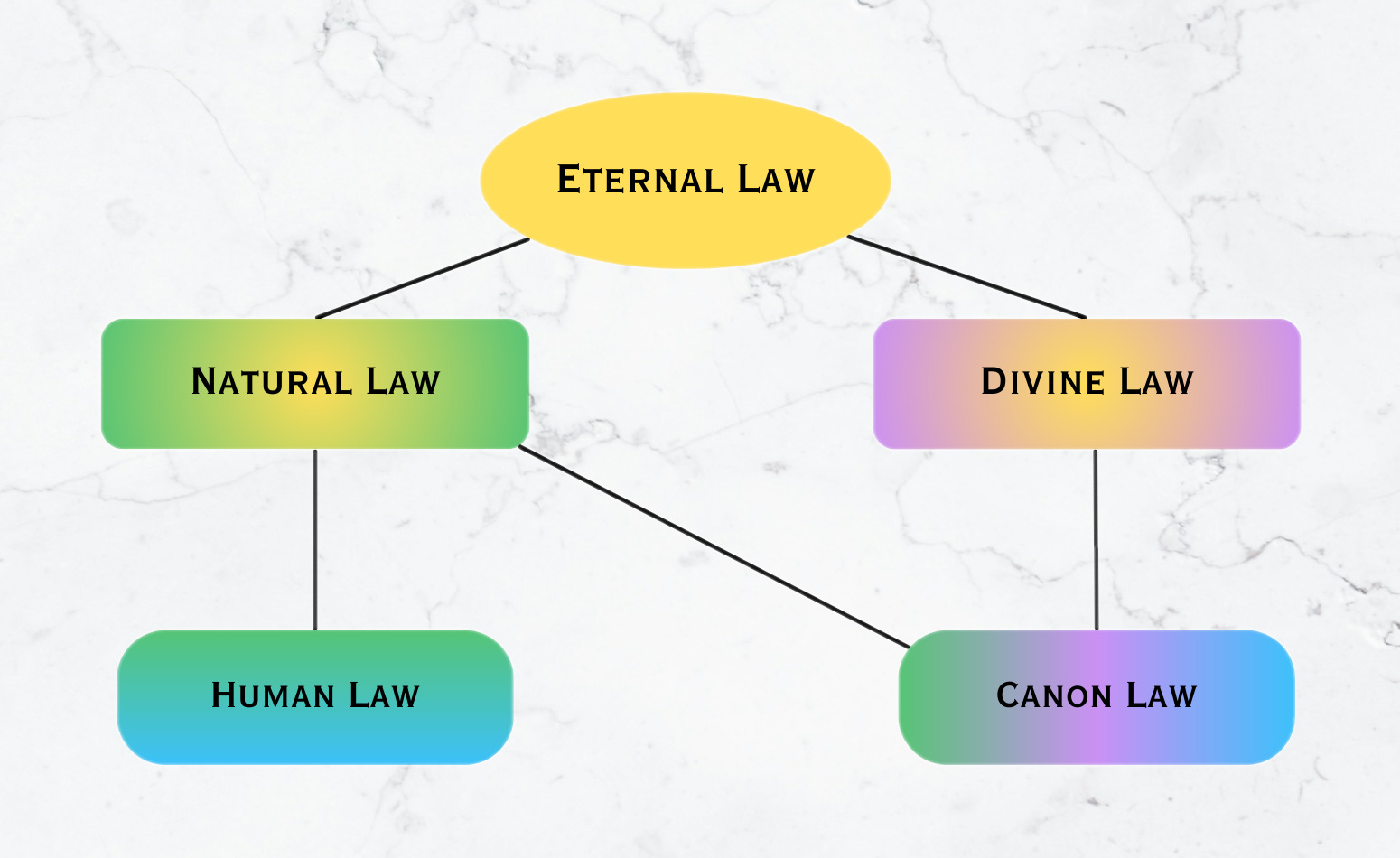
In summary then, these are the four categories of law – all properly distinct from one another, yet deeply interrelated – that Aquinas proposes and expounds:
There is the eternal law… the supreme and immutable ordinances of Divine Reason, in which all authentic law and authority must be ultimately rooted.
There is the natural law… through which every creature participates in the eternal law imprinted upon it, i.e. by the inclination of its created nature, which can be detected, discerned, and discovered by the natural light of human reason.
There is human law… whereby human legislators employ the light of reason to discern how the general principles of the natural law should be prudently applied to govern their particular society for the benefit of the common good, which is the natural happiness and worldly flourishing of creatures.
And there is divine law… whereby the divine legislator determines special means to direct humanity to supernatural happiness, complementing the sphere of human law with divine commands that natural reason alone could never have discovered – and in this way, enabling humanity to share more perfectly in the eternal law than it ever could have, if it were left to the light of natural reason alone.26
Here it can be briefly noted that Pope Leo XIII – following the Angelic Doctor closely – repeats much the same, in his encyclical Libertas (June 20, 1888), nn. 7-10.
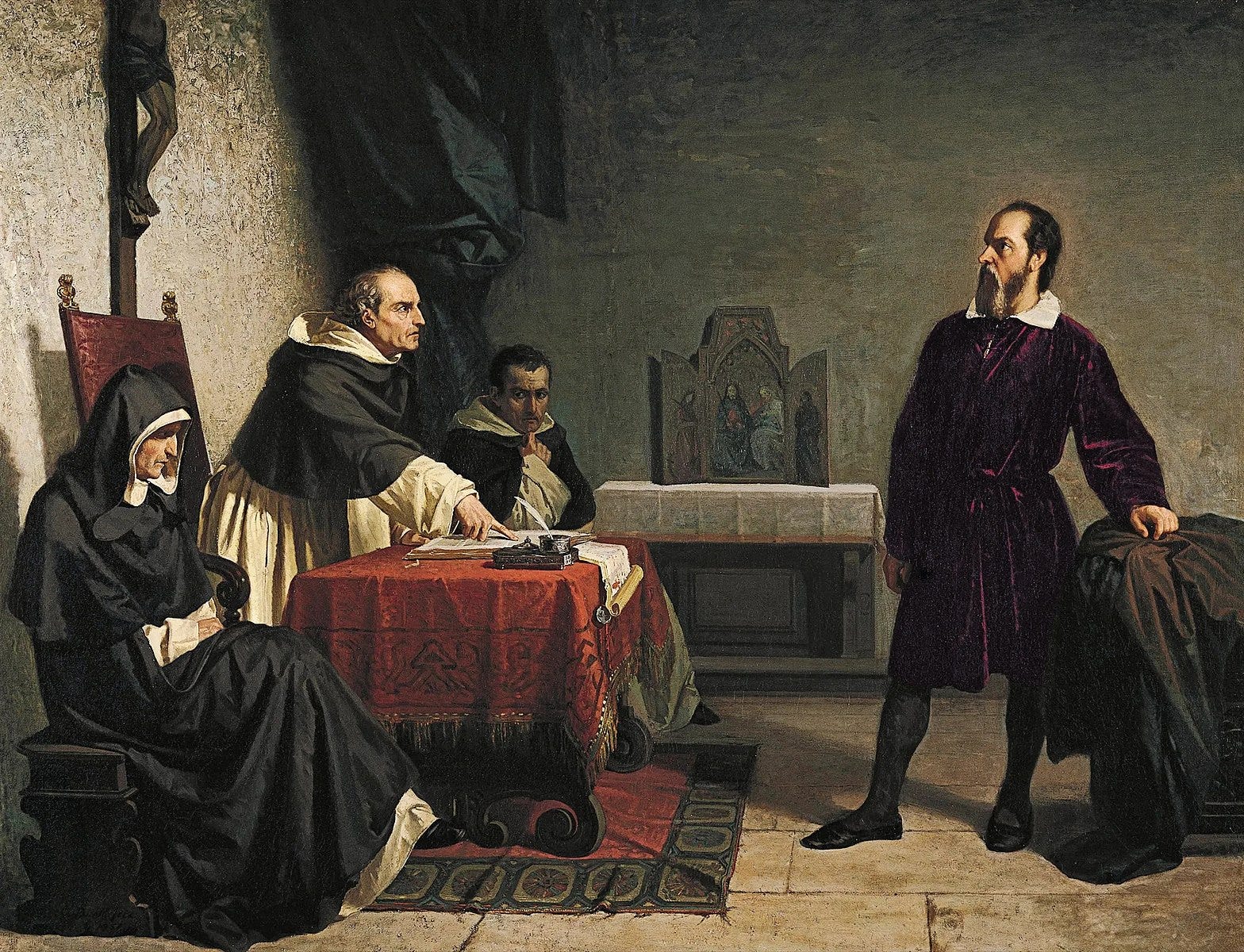
“But they were, all of them, deceived… for another law was made: from the Decretals of Pseudo-Isidore, forged in the ninth century, the Italian monastic jurist Gratian compiled a master law, to control all others.”
V. Canon Law
Here I am obliged, as a canon lawyer, to offer an addendum to Aquinas’ framework: some commentary on another category of law, which does not fit perfectly into any of the aforementioned categories. For indeed, the Catholic Church claims its own inherent right to make laws governing its own subjects: these are called ecclesiastical laws, or canon law. Now at first, it might seem that canon law is nothing other than a unique sub-category of human law: whereby Catholic legislators draw upon the natural law to discern how its principles of should be prudently applied to govern the society or community that arises through membership in the Catholic Church. And indeed, there are some occasions where ecclesiastical-canonical law is precisely that: for instance, in the canons laying down procedural laws for trials, where processes and requirements supporting the natural right of defense are derived from nothing other than the natural law alone,27 just as procedural law in any human society must be. On these instances, we should acknowledge that ecclesiastical-canonical law is correctly understood as simply a special instance of human law (binding uniquely upon those who are theologically constituted as members of the Catholic Church).
But that is not the limit of what is possible in ecclesiastical law… and this is where we hit upon the critical difference. While ordinary human laws are exclusively rooted in principles of the natural law, ecclesiastical-canonical law claims the ability to be derived not only from those same principles of the natural law but also from special ordinances of divine law. This possibility flows from the premise that – in contrast with ordinary human rulers, who are responsible for the worldly or natural happiness of their citizens – the Church considers itself uniquely authorized by Christ to enforce the external observance of even divine law among the Christian faithful. It claims this as an inherent right flowing forth from its divinely-instituted purpose: the salvation of souls, which is the eternal or supernatural happiness of its members, not merely their natural happiness in this life. As a consequence of being founded by Christ, the Church considers itself authorized even to enforce divine law among its membership – even to the point of coercion via certain penalties, and punishing grave external violations of divine law (such as offenses against the sacraments) – and this is a truly radical power that no merely human legislator could ever reasonably claim.28
The result is a significantly broader scope of authority available to ecclesiastical rulers: they can promulgate canonical legislation rooted not only in matters of natural law (e.g. determining procedures to safeguard justice) but also in matters of divine law (e.g. determining penalties, or restrictions upon the sacraments) that could otherwise absolutely never be justified on the basis of natural law alone. It is this unique ability to draw upon two sources of law (natural and divine) that gives rise to the uniquely mixed character of ecclesiastical law – and in this way, it differs in a subtle but profound manner from ordinary human law in the sense that Aquinas discusses.
Thus, just as human law can repeat and enforce the demands of the natural law (e.g. declaring that rape and murder are grave offenses against the common good that should be punished), in the very same way ecclesiastical-canonical law is capable of repeating and enforcing the demands of divine law (e.g. declaring that heresy is a grave offense against the common good that should be punished; or that the sacraments have been established definitively in a manner that the Church has power to enforce, but absolutely no authority to change). Nor is canon law limited to merely repeating divine law (just as human law is not limited to merely repeating the natural law)… rather, ecclesiastical legislators (like ordinary human legislators) have some natural freedom to devise reasonable laws governing their own communities, as they see fit to most prudently shepherd the Christian faithful. From this there arises legitimate diversity among the laws of different Catholic Churches, both Latin and Eastern. And to that same extent – insofar as some ecclesiastical-canonical laws are not deeper expression of natural law or divine law, but freely devised by ecclesiastical rulers as a prudential and reasonable ordinance – they can be freely altered, or dispensed, or even abolished entirely, at the discretion of that same authority. Ecclesiastical laws of this sort are often called disciplinary laws (to distinguish them from laws that express religious doctrine), or “merely ecclesiastical laws” (to signify that their authority comes “merely” from the discretion of ecclesiastical rulers).


Custom
Here at least a few words must also be said about custom, which Aquinas expounds as a deep source of law – not only in the sense that it can be made into law, but also in the more radical sense that it can (as always: on the essential condition that it accords with right reason)29 even supplant written law when sustained by the community:
All law proceeds from the reason and will of the lawgiver; the Divine and natural laws from the reasonable will of God; the human law from the will of man, regulated by reason. Now just as human reason and will, in practical matters, may be made manifest by speech, so may they be made known by deeds: since seemingly a man chooses as good that which he carries into execution. But it is evident that by human speech, law can be both changed and expounded, insofar as it manifests the interior movement and thought of human reason. Wherefore by actions also, especially if they be repeated, so as to make a custom, law can be changed and expounded; and also something can be established which obtains force of law, insofar as by repeated external actions, the inward movement of the will, and concepts of reason are most effectually declared; for when a thing is done again and again, it seems to proceed from a deliberate judgment of reason. Accordingly, custom has the force of a law, abolishes law, and is the interpreter of law.30
Again, the very idea that the deeply-rooted custom of a community can be a source of law properly understood (generating reasonable rights and obligations) testifies loudly to a deep philosophical rejection of any claim that man-made laws obtain their authority via coercive power. Custom shines a light once more upon that core thread of reason as the ultimate source of law, and thus invites us to hold a nuanced legal philosophy that avoids any inhumanly cruel or rigidly legalistic conclusions.
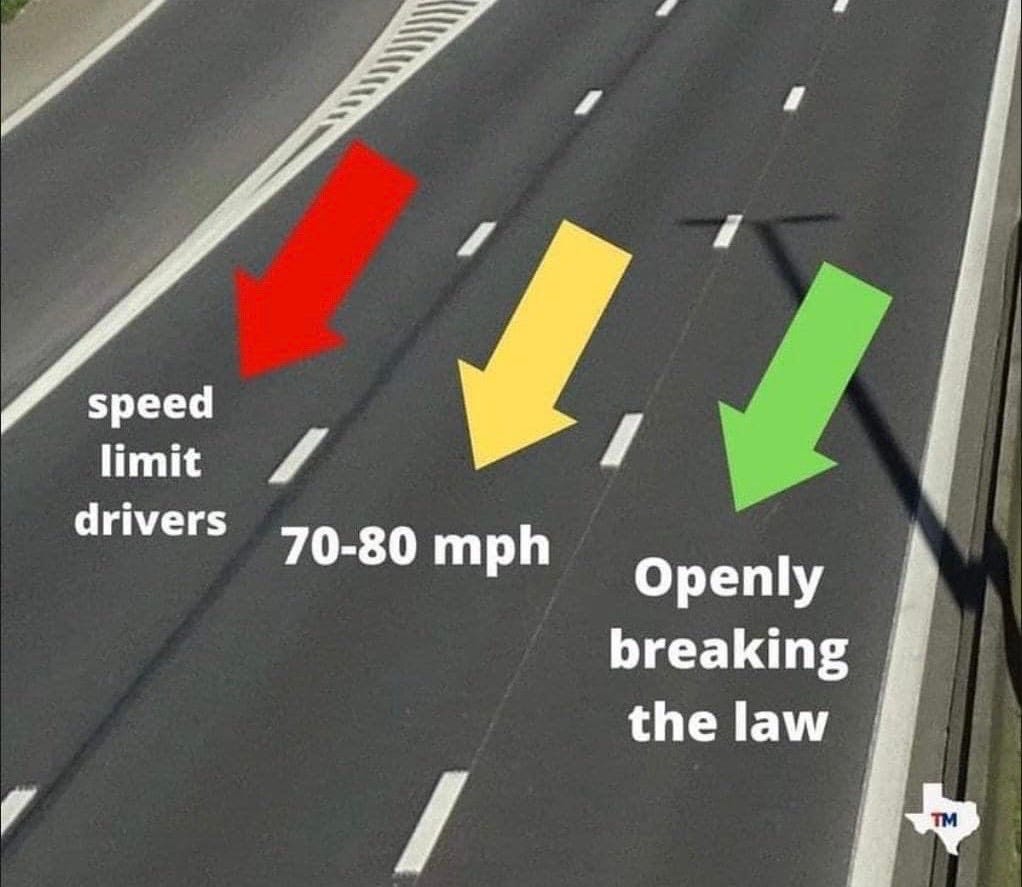
An imperfect (but nearly perfect) illustration of this idea in action can be provided by sketching out a consideration of how the speed limit functions in our society. For on the upper end, human reason can identify something like a “natural law” speed limit: this is the point at which (taking into account what the roads and/or vehicles were designed to handle) driving any faster would seem to become gravely and objectively (i.e. unreasonably) dangerous to human life.31 Somewhere below this maximum, human law can determine what constitutes a reasonable speed limit more specifically: some communities may deem it more prudent to lean closer to the natural maximum that prioritizes speed and convenience, while other communities deem it more prudent to impose a dramatically lower speed limit that benefits the common good in an entirely different way. But in either case, the law cannot be rigidly cold and inhuman: if there is some true emergency in which observing the lower speed limit will cause grave harm, then that man-made speed limit could very well cease to be reasonable under that circumstance, in which case it should not be observed. Again this would (in the Thomistic vision) not even truly be an occasion of breaking or violating the law, but simply an occasion of recognizing (correctly) that man-made laws are necessarily imperfect: they can only be reasonable as a general rule, and must reasonably give way (ceasing to morally require obedience) under extraordinary demands.
But man-made laws are also flexible in yet another way, beyond this: if the real-world flow of traffic on certain roads is customarily maintained at a higher but still reasonable speed (e.g. +5-10 mph above the written speed limit), and if that custom is reasonably tolerated by those responsible for enforcing the law… then that custom may eventually come to hold real moral force as a form of unwritten law governing the community. And if this happens, then the legislator who recognizes that custom by officially updating the speed limit is, in the Thomistic vision, absolutely not rewarding criminals, but simply recognizing (correctly) the proper role that the custom of the community plays in shaping the very existence of man-made laws. Custom can thus not only influence how laws should be interpreted, but it can also establish new obligations, altering them, abolishing them, or even rejecting them outright and refusing to let them take root if a new burden is deemed unreasonable by the community.
Unwritten law is absolutely not the ideal, for many reasons: but that does not stop it from being real. And this is why we can recognize the existence of customary law (or even something like common-law marriage) as a real source of legal rights and obligations despite being formally unwritten. This is also how man-made laws can fall into desuetude and be (at least morally) abrogated: obsolete laws bind absolutely nobody in conscience to any obedience whatsoever, even if “technically” they remain written on the books. And this is why the Catholic Codes of Canon Law – for the Latin Church (CIC canons 23-28) and again for the Eastern Churches (CCEO canons 1506-1509) – explicitly carve out a mechanism by which custom (even potentially custom contrary to written law) can obtain the full force of law: when it is reasonable, and maintained with at least the tacit approval of the legislator for a sufficient length of time.
Unjust Law
We have already touched upon this, but there are a few more threads here that ought to be unpacked, and woven together. Once more, Aquinas holds explicitly:
Laws framed by man are either just or unjust. If they be just, they have the power of binding in conscience, from the eternal law whence they are derived, according to Prov. 8:15: By Me kings reign, and lawgivers decree just things.
Now laws are said to be just, both from the end, when, to wit, they are ordained to the common good — and from their author, that is to say, when the law that is made does not exceed the power of the lawgiver — and from their form, when, to wit, burdens are laid on the subjects, according to an equality of proportion and with a view to the common good. [Such laws] are just and binding in conscience, and are legal laws.
[But laws may be unjust] by being contrary to human good, through being opposed to the things mentioned above — either in respect of the end, as when an authority imposes on his subjects burdensome laws, conducive, not to the common good, but rather to his own cupidity or vainglory — or in respect of the author, as when a man makes a law that goes beyond the power committed to him — or in respect of the form, as when burdens are imposed unequally on the community, although with a view to the common good. The like are acts of violence rather than laws; because, as Augustine says (De Lib. Arb. i, 5), a law that is not just, seems to be no law at all. Wherefore such laws do not bind in conscience, except perhaps in order to avoid scandal or disturbance…32
Similarly, the Compendium of the Social Doctrine of the Church expounds – with an array of embedded footnotes that can be fruitfully explored, although I omit them here:
396. Authority must be guided by the moral law. All of its dignity derives from its being exercised within the context of the moral order, “which in turn has God for its first source and final end”. Because of its necessary reference to the moral order, which precedes it and is its basis, [authority] “has no existence except in God; cut off from God it must necessarily disintegrate”. It is from the moral order that authority derives its power to impose obligations and its moral legitimacy, not from some arbitrary will or from the thirst for power, and it is to translate this order into concrete actions to achieve the common good.
397. Authority must recognize, respect and promote essential human and moral values. These are innate and “flow from the very truth of the human being and express and safeguard the dignity of the person; values which no individual, no majority and no State can ever create, modify or destroy”. These values do not have their foundation in provisional and changeable “majority” opinions, but must simply be recognized, respected and promoted as elements of an objective moral law, the natural law written in the human heart (cf. Rom 2:15), and as the normative point of reference for civil law itself. If, as a result of the tragic clouding of the collective conscience, skepticism were to succeed in casting doubt on the basic principles of the moral law, the legal structure of the State itself would be shaken to its very foundations, being reduced to nothing more than a mechanism for the pragmatic regulation of different and opposing interests.
398. Authority must enact just laws, that is, laws that correspond to the dignity of the human person and to what is required by right reason. “Human law is law insofar as it corresponds to right reason and therefore is derived from the eternal law. When, however, a law is contrary to reason, it is called an unjust law; in such a case it ceases to be law and becomes instead an act of violence”. Authority that governs according to reason places citizens in a relationship not so much of subjection to another person as of obedience to the moral order and, therefore, to God himself who is its ultimate source. Whoever refuses to obey an authority that is acting in accordance with the moral order “resists what God has appointed” (Rom 13:2). Analogously, whenever public authority — which has its foundation in human nature and belongs to the order pre-ordained by God — fails to seek the common good, it abandons its proper purpose and so delegitimizes itself.
Thus properly understood, “unjust law” is not a true category of law at all, but a radical perversion of law – and invoking “the rule of law” as a rationale for enforcing such laws is a reprehensible abuse of authority. When man-made laws become unjust, because the law ceases to be truly reasonable… when the human authority is corrupted and wielded in ways that offend human dignity, instill fear, victimize the vulnerable, and intimidate critics… then the “law” devolves into nothing more than a morally bankrupt shell containing violence and coercion utterly divorced from right reason, falsely claiming to operate (and be owed obedience) under the banner of true law… and disobedience to unjust authority becomes morally possible, if not obligatory.
400. Recognizing that natural law is the basis for and places limits on positive law means admitting that it is legitimate to resist authority should it violate in a serious or repeated manner the essential principles of natural law. Saint Thomas Aquinas writes that “one is obliged to obey ... insofar as it is required by the order of justice”. Natural law is therefore the basis of the right to resistance.
In fact, disobedience of this sort is not even true disobedience, morally speaking, although it may superficially appear to be so. The reality is the opposite: disobedience to an unjust law is properly obedience to a higher law – to the rule of right reason, which is proper to our nature as rational animals. As I have said before, and will say again:
Your innate sense of justice that transcends man-made laws, and sometimes even outweighs them – the rule of reason by which you apprehend (often instinctively) when human laws are broken and unjust (according to a higher and more true measure of justice) and therefore in need of reform and/or the witness of peaceful civil disobedience – that is what we mean when we speak of the “natural law”.
Martin Luther King, Jr. recognized all of this – and I do mean all of this33 – when he expounded, in his famous Letter from a Birmingham Jail (1963):
You express a great deal of anxiety over our willingness to break laws. This is certainly a legitimate concern. Since we so diligently urge people to obey the Supreme Court’s decision of 1954 outlawing segregation in the public schools, at first glance it may seem rather paradoxical for us consciously to break laws.
One may well ask: “How can you advocate breaking some laws and obeying others?” The answer lies in the fact that there are two types of laws: just and unjust. I would be the first to advocate obeying just laws. One has not only a legal but a moral responsibility to obey just laws. Conversely, one has a moral responsibility to disobey unjust laws. I would agree with St. Augustine that “an unjust law is no law at all.”
Now, what is the difference between the two? How does one determine whether a law is just or unjust? A just law is a man-made code that squares with the moral law or the law of God. An unjust law is a code that is out of harmony with the moral law. To put it in the terms of St. Thomas Aquinas: An unjust law is a human law that is not rooted in eternal law and natural law. Any law that uplifts human personality is just. Any law that degrades human personality is unjust. All segregation statutes are unjust because segregation distorts the soul and damages the personality. It gives the segregator a false sense of superiority and the segregated a false sense of inferiority. […] Thus it is that I can urge men to obey the 1954 decision of the Supreme Court, for it is morally right; and I can urge them to disobey segregation ordinances, for they are morally wrong.
[…] Sometimes a law is just on its face and unjust in its application. For instance, I have been arrested on a charge of parading without a permit. Now, there is nothing wrong in having an ordinance which requires a permit for a parade. But such an ordinance becomes unjust when it is used to maintain segregation and to deny citizens the First-Amendment privilege of peaceful assembly and protest.
I hope you are able to see the distinction I am trying to point out. In no sense do I advocate evading or defying the law, as would the rabid segregationist. That would lead to anarchy. One who breaks an unjust law must do so openly, lovingly, and with a willingness to accept the penalty. I submit that an individual who breaks a law that conscience tells him is unjust, and who willingly accepts the penalty of imprisonment in order to arouse the conscience of the community over its injustice, is in reality expressing the highest respect for law.
[…] We should never forget that everything Adolf Hitler did in Germany was “legal” and everything the Hungarian freedom fighters did in Hungary was “illegal.” It was “illegal” to aid and comfort a Jew in Hitler’s Germany. Even so, I am sure that, had I lived in Germany at the time, I would have aided and comforted my Jewish brothers. If today I lived in a Communist country where certain principles dear to the Christian faith are suppressed, I would openly advocate disobeying that country’s antireligious laws.
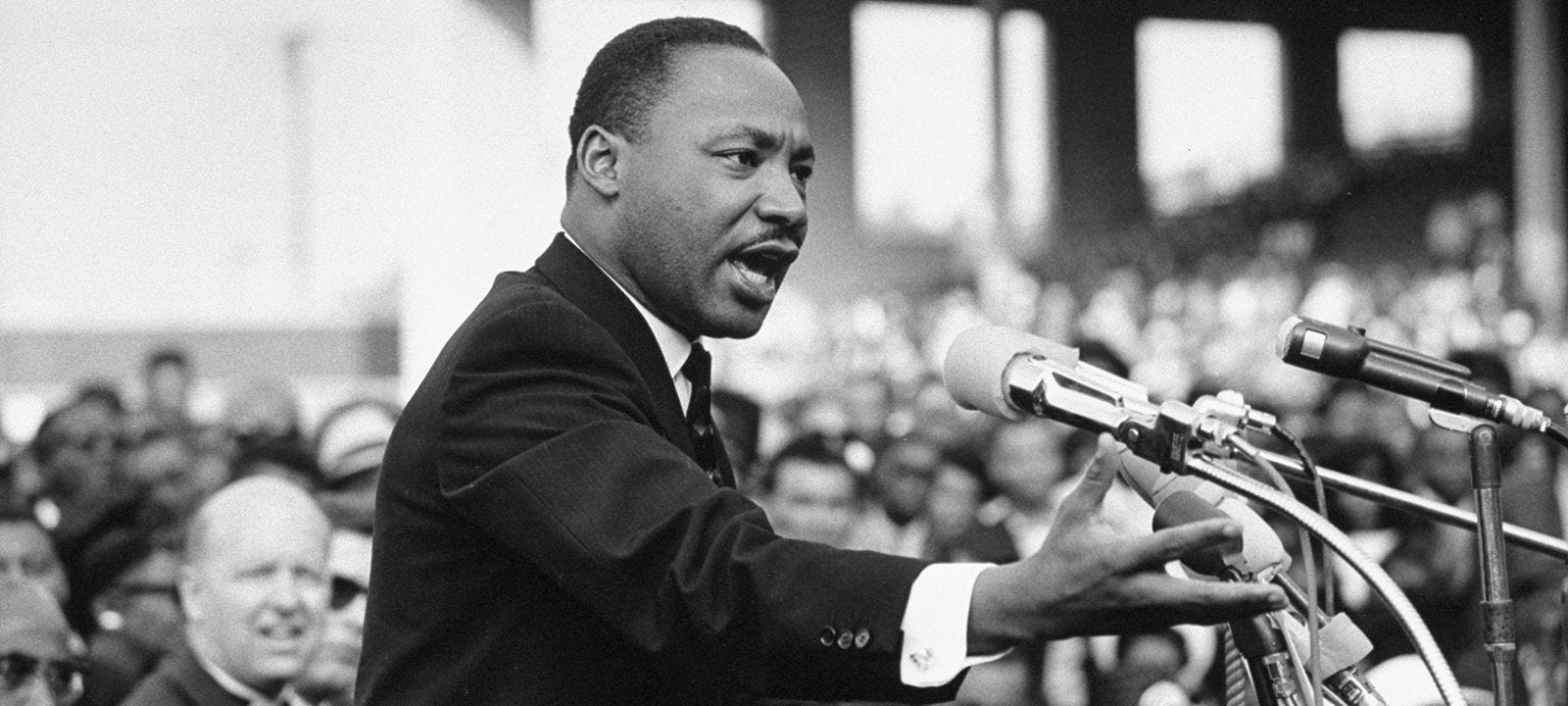
Commenting on Dr. King’s approach, Chris Damian insightfully observes:
At the same time, King believed in the goodness of law and order in society. According to [Anthony E. Cook’s 1990 essay “Beyond Critical Legal Studies: The Reconstructive Theology of Dr. Martin Luther King, Jr.”], King “refused to place the goal of a reconstructive community above the means used to achieve it.”
So King would openly disobey the law, and then willingly accept the punishment prescribed by law. This submission to legal consequences for his activity was, paradoxically, subversive. When the punishment and the horrific tactics of enforcement were given attention through media coverage of mass civil disobedience, the injustice of the law came out into the light and became visible to the public. Cook writes, “Through civil disobedience, one could simultaneously demonstrate respect for the rule of law in preserving social order while opposing laws supportive of unjust social orders.” Indeed, through mass nonviolent civil disobedience, the application of the law would be the means by which its injustice would be highlighted. King would force the law to act so that it could expose itself as evil. Injustice would be thrown into the light.
Through nonviolent mass civil disobedience, then, King and others are transformed from victims of an unjust law which coerces them into oppression, and they become agents of change who coerce the law to act and expose itself as unjust. They are immediately liberated from the role of victim, making themselves agents of truth. And they simultaneously work towards the long-term liberation of society from the unjust law they are exposing.
For much the same reason, it follows that those who would decry civil disobedience as a source of “scandal” do not even correctly understand what they are talking about. For if the moral judgment driving civil disobedience is correct, then it is impossible for that disobedience to be a source of true scandal in the moral sense (inducing others to sin), when it is in fact publicly testifying to right reason. At most, civil disobedience can only cause scandal in the non-sinful equivocal sense (causing people to wonder, or be concerned, or be shocked and surprised)… which just so happens to be in the same sense in which Christ Himself scandalized the Pharisees. And even this may be something that it is arguably prudent to avoid, if an injustice is not certainly or manifestly grave; but in some cases, the only reasonable course of action may be resistance. The truth is that not every stumbling block [Greek: σκάνδαλον, skandalon] is a bad thing: some “scandals” are not any sort of invitation to any sin, but simply invitations to wake up and recognize that the only thing actually causing us to stumble is the immense lie that we have until now been uncritically accepting. Sometimes, being “scandalized” by the truth – or by right reason – is a real grace, and an opportunity for growth.
In Andor: A Star Wars Story, there is an influential text that quietly fuels the Rebellion’s fight against the authoritarian and tyrannical Empire. I mention this in closing (well, because it is Star Wars, and I am me… but also) because I think it is worth observing that the heart of this manifesto is fueled by nothing other than an implicit appeal to the natural law, in the deep sense that I have been hammering upon. When the author observes that “freedom is a pure idea: it occurs spontaneously and without instruction,” and that “the Imperial need for control is so desperate because it is so unnatural,” this is simply another (admittedly more poetic and less tediously philosophical) way of asserting that freedom is a good that we are inclined toward by our very nature.
And in exactly the same way, justice – like freedom – is a good that we are inclined toward by our very nature. Justice is a pure idea: it occurs spontaneously and without instruction. Random acts of disobedience to unjust authorities are occurring constantly across the globe; there are whole armies, nations that have no idea they already believe in some form of natural law theory. In the end, there is no way to escape this conclusion: when you feel compelled by right reason to recognize claims of natural justice – if you find yourself compelled to expound or defend innate, universal human rights – that is precisely the natural law “written” upon your heart, whether you fully subscribe to the Thomistic account of what that must ultimately imply, or no.
Summa Theologiae: Part I-II, Question 90, Article 1, Response.
Summa Theologiae: Part I-II, Question 90, Article 4, Response.
Summa Theologiae: Part I-II, Question 90, Article 1, Reply to Objection 3.
This is a real claim I witnessed a Trump-supporting Catholic arguing in September 2020, which has now been forever burned into my mind. Here I will also note that the heart of this sentiment – upholding power as the only rule that deserves serious consideration – resonates deeply with another famous quote from… Lord Voldemort: “There is no good and evil, only power and those too weak to seek it.”
Here I am speaking in a very broad sense, while utilizing a fundamentally Thomistic framework. Readers should be aware, however, that some Enlightenment authors (notably Hobbes, Locke, and Rousseau) will at times employ a similar-sounding formulation in their competing frameworks of legal philosophy (e.g. invoking terms such as reason and the common good) while utilizing radically different definitions of those terms. While an in-depth analysis of those differences lies far beyond the scope of this entry, it should simply be acknowledged that complex equivocation of terms is possible, and we should remain attentive to this if we attempt to place the legal philosophy of Aquinas into dialogue with the modern legal philosophies derived significantly from Enlightenment authors.
Summa Theologiae: Part I-II, Question 90, Article 2, Response. (“…since the law is chiefly ordained to the common good, any other precept in regard to some individual work, must needs be devoid of the nature of a law, save in so far as it regards the common good.”)
Summa Theologiae: Part I-II, Question 95, Article 1, Response. (“…man has a natural aptitude for virtue; but the perfection of virtue must be acquired by man by means of some kind of training. […] Consequently a man needs to receive this training from another, whereby to arrive at the perfection of virtue. And as to those young people who are inclined to acts of virtue, by their good natural disposition, or by custom, or rather by the gift of God, paternal training suffices, which is by admonitions. But since some are found to be depraved, and prone to vice, and not easily amenable to words, it was necessary for such to be restrained from evil by force and fear, in order that, at least, they might desist from evil-doing, and leave others in peace, and that they themselves, by being habituated in this way, might be brought to do willingly what hitherto they did from fear, and thus become virtuous. Now this kind of training, which compels through fear of punishment, is the discipline of laws. Therefore in order that man might have peace and virtue, it was necessary for laws to be framed…”) Note well: Aquinas acknowledges that restraining citizens by fear of punishment is not the ideal, but rather simply a practical necessity; the utopian ideal is absolutely to maintain civil society (and virtue) without any external coercion, simply through the free consent of all who have been properly instructed.
Summa Theologiae: Part I-II, Question 91, Article 1. (“Now it is evident, granted that the world is ruled by Divine Providence… that the whole community of the universe is governed by Divine Reason. Wherefore the very Idea of the government of things in God the Ruler of the universe, has the nature of a law. And since the Divine Reason conceives nothing from time, but has an eternal concept… [therefore] this kind of law must be called eternal.”) For additional reflection on the question of “fate”, see also Part I-I, Question 116.
Summa Theologiae: Part I-II, Question 93, Article 3.
Summa Theologiae: Part I-II, Question 90, Article 4, Reply to Objection 1. (“The natural law is promulgated by the very fact that God instilled it into man’s mind so as to be known by him naturally.”)
Summa Theologiae: Part I-II, Question 91, Article 2, Response. For additional reflection on the natural law, see also Part I-II, Question 94, where Aquinas acknowledges that the immutability of the natural law is properly applied only to its first principles (see Article 5: “the natural law is altogether unchangeable in its first principles: but in its secondary principles, [which] are certain detailed proximate conclusions drawn from the first principles, the natural law [may] be changed in some particular cases of rare occurrence, through some special causes hindering the observance of such precepts”).
Summa Theologiae: Part I-II, Question 93, Article 3, Reply to Objection 2.
Summa Theologiae: Part I-II, Question 95, Article 2, Response.
Again, I am speaking here from a Thomistic perspective in which true moral authority and true political authority are necessarily linked by nature, and will always be in harmony when properly understood. If moral authority (rooted in right reason) does not exist, or is forfeit to some degree, then obedience to that degree is not truly owed, and there can be no coherent claim to political authority (nor, simply speaking, any authority to enforce obedience via power/violence) to that degree. As noted above (footnote 5) however, introducing the legal philosophies of Enlightenment thinkers will tend to complicate this, insofar as they attempt to sever this connection and bifurcate authorities: e.g. allowing political authority to exist independently from moral authority, whence it may be enforced by power/violence legally (even if not morally). On this approach, while unjust ordinances may become grounds for resistance and revolution to repeal and replace them (even perhaps, if necessary, via the overthrow of the tyrant), such immoral abuses remain legal until they are replaced… whereas in the Augustinian-Thomistic view, this idea is fundamentally incoherent on a deep level, and instead the immoral or unjust law is held to be no true law at all.
Ibid. (“Some things are therefore derived from the general principles of the natural law, by way of conclusions; e.g., that one must not kill may be derived as a conclusion from the principle that one should do harm to no man: while some are derived therefrom by way of determination; e.g., the law of nature has it that the evil-doer should be punished; but that he be punished in this or that way, is [made by men as] a determination of the law of nature. Accordingly both modes of derivation are found in the human law. But those things which are derived in the first way, are contained in human law not as emanating therefrom exclusively, but have some force from the natural law also. But those things which are derived in the second way, have no other force than that of human law.”)
Summa Theologiae: Part I-II, Question 96, Article 6, Response. (And to this Aquinas immediately adds: “Nevertheless it must be noted, that if the observance of the law according to the letter does not involve any sudden risk needing instant remedy, it is not competent for everyone to expound what is useful and what is not useful to the state: those alone can do this who are in authority, and who, on account of such like cases, have the power to dispense from the laws. If, however, the peril be so sudden as not to allow of the delay involved by referring the matter to authority, the mere necessity brings with it a dispensation, since necessity knows no law.”) Here we can also note that a similar nuance caused by urgent necessity arises with regard to the ownership of property, as Aquinas addresses in Part II-II, Question 66, Article 7, Response and Reply to Objection 2:
…the division and appropriation of things which are based on human law, do not preclude the fact that man’s needs have to be remedied by means of these very things. Hence whatever certain people have in superabundance is due, by natural law, to the purpose of succoring the poor. For this reason Ambrose says, and his words are embodied in the Decretals (Dist. xlvii, can. Sicut ii): It is the hungry man’s bread that you withhold, the naked man’s cloak that you store away, the money that you bury in the earth is the price of the poor man’s ransom and freedom.
Since, however, there are many who are in need, while it is impossible for all to be succored by means of the same thing, each one is entrusted with the stewardship of his own things, so that out of them he may come to the aid of those who are in need. Nevertheless, if the need be so manifest and urgent, that it is evident that the present need must be remedied by whatever means be at hand (for instance when a person is in some imminent danger, and there is no other possible remedy), then it is lawful for a man to succor his own need by means of another’s property, by taking it either openly or secretly: nor is this properly speaking theft or robbery.
[…] It is not theft, properly speaking, to take secretly and use another’s property in a case of extreme need: because that which he takes for the support of his life becomes his own property by reason of that need.
Human law may sometimes be permitted to threaten and employ forms of violence in service of the common good – always within due limits, and never beyond the limits of right reason (which must always properly account for the rights of others) – but fundamentally, violence contributes absolutely nothing to the true source of the law’s moral authority, which stands (or falls) exclusively depending on what is (or is not) truly reasonable in service of the common good. And if ever that link to right reason is broken or lost, then violence becomes radically unjust – even the letter of the law superficially permits it.
Summa Theologiae: Part I-II, Question 91, Article 3, Response. (“These particular determinations, devised by human reason, are called human laws, provided the other essential conditions of law be observed...”)
Summa Theologiae: Part I-II, Question 95, Article 2, Reply to Objection 3. (“The general principles of the natural law cannot be applied to all men in the same way on account of the great variety of human affairs: and hence arises the diversity of positive laws among various people.”)
Summa Theologiae: Part I-II, Question 91, Article 4, Response. (“Third, because man can make laws in those matters of which he is competent to judge. But man is not competent to judge of interior movements, that are hidden, but only of exterior acts which appear: and yet for the perfection of virtue it is necessary for man to conduct himself aright in both kinds of acts. Consequently human law could not sufficiently curb and direct interior acts; and it was necessary for this purpose that a Divine law should supervene. Fourth, because, as Augustine says (De Lib. Arb. i, 5,6), human law cannot punish or forbid all evil deeds: since while aiming at doing away with all evils, it would do away with many good things, and would hinder the utility of the common good, which is necessary for human intercourse. In order, therefore, that no evil might remain unforbidden and unpunished, it was necessary for the Divine law to supervene, whereby all sins are forbidden.”)
Ibid. (“First, because it is by law that man is directed how to perform his proper acts in view of his last end. And indeed if man were ordained to no other end than that which is proportionate to his natural faculty, there would be no need for man to have any further direction on the part of his reason, besides the natural law and human law which is derived from it. But since man is ordained to an end of eternal happiness which is [not proportionate] to man’s natural faculty… therefore it was necessary that, besides the natural and the human law, man should be directed to his end by a law given by God.”)
Ibid. (“Second, because, on account of the uncertainty of human judgment, especially on contingent and particular matters, different people form different judgments on human acts; whence also different and contrary laws result. In order, therefore, that man may know without any doubt what he ought to do and what he ought to avoid, it was necessary for man to be directed in his proper acts by a law given by God, for it is certain that such a law cannot err.”)
Summa Theologiae: Part I-II, Question 91, Article 5, Response. To speak more precisely on this point, it is worth acknowledging that the Old Law contained a variety of precepts: moral, ceremonial, and judicial (Question 99), and it was only the ceremonial and judicial precepts of the Old Law which were annulled by the coming of Christ (Question 103, Article 3, Reply; and Question 104, Article 3, Reply). The moral precepts of the Old Law, however, belonged to the natural law (Question 100, Article 1, Reply), and it was on account of these enduring moral precepts that the Old Law was described as being binding forever (Question 103, Article 3, Reply to Objection 1). But the fact remains that the ceremonial and judicial precepts of the Old Law were done away with, and is sufficient to establish the fact that divine law is not wholly immutable, but has a certain capacity for change.
Summa Theologiae: Part I-II, Question 99, Article 3, Reply to Objection 2.
Summa Theologiae: Part I-II, Question 94, Article 5 (“…many things for the benefit of human life have been added over and above the natural law, both by the Divine law and by human laws.”) Or, to highlight this resonance in another way: the deep similarity between human and divine law can be seen by considering the notion of positive law: ordinances given (or posited) by some legislator, rather than being written into (and deduced by reason from) the very nature of created things. Thus: insofar as human law and divine law are not merely repeating the demands of the natural law, but drawing forth new determinations at the discretion of some human or divine lawgiver: then they can be recognized as merely positive law, and named as human positive law or divine positive law… with both having the same inherent potential to change (according to whatever the legislator considers reasonable, which may vary according to circumstances of time and place). This is why some authors will use the larger terms divine positive law (which Aquinas simply calls divine law) and divine natural law (which Aquinas simply calls natural law), to convey that both take their origin from the same divine law-giver… while remaining deeply and radically different types of divine law.
Summa Theologiae: Part I-II, Question 91, Article 4, Reply to Objection 1.
It should be acknowledged that canon law historically drew upon ordinary human law (i.e. Roman law) as a source/model for its own laws, and that even modern canon law allows for the possibility of civil law being given canonical effects (CIC canon 22)… but this does not justify considering human law as a source or foundation for canon law in the relevant sense, as a matter of principle. The fact is that ecclesiastical legislators have no obligation to draw upon (or to otherwise incorporate) any other man-made laws, comparable to the sense in which they are obliged to respect the natural law and divine law. Rather, ecclesiastical legislators may freely draw upon ordinary human law: insofar as they consider it to be prudent and wish to do so. Thus, while human law (specifically Roman law) was historically used as a model by ecclesiastical legislators for developing procedures – just as one nation might freely model their laws upon those of another, if they believe the laws were well-made and reasonably worthy of imitation – properly speaking, the moral authority of canonical procedural law is ultimately rooted in the natural law alone, just as the procedural laws of every nation are ultimately rooted in the natural law alone.
Beyond drawing attention to the fact that the 1983 Code of Canon law absolutely does establish delicts for certain violations of divine law (e.g. for heresy, or violations against the sacraments), we can also find an explicit claim regarding the Church’s competence to punish grave external violations of divine law under the general norm of canon 1399. For further reading on this question – specifically, regarding how the Church’s understanding of the natural right to religious freedom in civil society flows naturally from this limitation of human law, which is (critically) not violated in the same way by ecclesiastical law restrictions punishing heresy among its membership – see my 2014 JCL thesis: “On Legitimate Coercion And The Doctrine Of Religious Freedom”).
If a man-made custom is not genuinely in accord with right reason, then it is incapable of binding with any moral force, just as it is incapable of becoming law. To briefly name two real-world examples that really deserves their own reflection: if a deeply misguided effort to avoid scandal results in a “custom” of covering up accusations and quietly relocating accused sexual predators to a new community where they are not known, or a “custom” of sending clerics who have fathered children out of wedlock to a new diocese without the receiving bishop ever knowing what the true reason for the transfer – then, even if such a practice were tolerated (or encouraged, or actively supported) by higher authorities, this could never truly be binding an authentic customary norm. Even Aquinas admits that it is certainly possible for “vicious customs and corrupt habits” to obscure the natural law (at least partially, although not absolutely) in the hearts of mankind (Summa Theologiae: Part I-II, Question 94, Article 6, Response: “the secondary precepts [of] the natural law can be blotted out from the human heart, either by evil persuasions… or by vicious customs and corrupt habits, as among some men, theft, and even unnatural vices, as the Apostle states [Romans 1:18-23], were not esteemed sinful”). But no matter how deeply engrained a “vicious custom” may be in a given society – no matter how reasonable it may seem to the majority of citizens, and no matter how widely accepted it is by authorities (civil or ecclesiastical) – we must hold that custom should be discarded or reformed, in the moment we become convinced it is not in accord with right reason.
Summa Theologiae: Part I-II, Question 97, Article 3, Response.
In just the same way, there may also be a lower limit: this is the point at which (taking into account the actual speed of traffic currently in motion on the road) driving any slower or stopping becomes unreasonably dangerous to human life.
Summa Theologiae: Part I-II, Question 96, Article 4, Response. (For the sake of completeness, it should be noted that Aquinas adds: “laws may be unjust through being opposed to the Divine good: such are the laws of tyrants inducing to idolatry, or to anything else contrary to the Divine law: and laws of this kind must nowise be observed, because, as stated in Acts 5:29, we ought to obey God rather than man.” I have omitted mention of this only because it verges on a more complex discussion: presupposing clarity about what is and not authentically divine law. For related discussion about which authority is and is not competent to enforce divine law, readers may refer to my JCL thesis linked above (footnote 27).
It can perhaps be disputed whether or not MLK implicitly accepts the bifurcation between moral and political authority that some Enlightenment thinkers propose (footnote 14), and thus holds forth some real obligation to accept the penalty for breaking an unjust law (whence “one who breaks an unjust law must do so… with a willingness to accept the penalty”). Given his explicit reliance upon the legal philosophies of Augustine and Aquinas, however, I would be inclined to argue that MLK’s observation is best interpreted in line with their approach. And thus, although accepting an unjust penalty is not (indeed, cannot be) a true moral obligation as such, nevertheless it is something that in general ought to be willingly done. For that is how citizens can subvert the unjust ordinance to serve a higher purpose that truly benefits the common good of their community (“in order to arouse the conscience of the community over its injustice”), and that is the proper good that citizens absolutely do have a deeper moral obligation to support. Thus, even while it may be technically moral to evade an unjust penalty (above all: via reasonable means, such as simple evasion of detection, or shrewd legal maneuvering) – although MLK emphatically does not advocate for this! – he is correct to argue that the posture of a willingness to accept that penalty does remain a distinct and even urgent obligation (above all: when it cannot reasonably be avoided, such as when the only means to escape would require committing some other moral evil).
This is excellently written, Dan! Thank you so much!